February 23, 2026

Brochure

showroom

call us


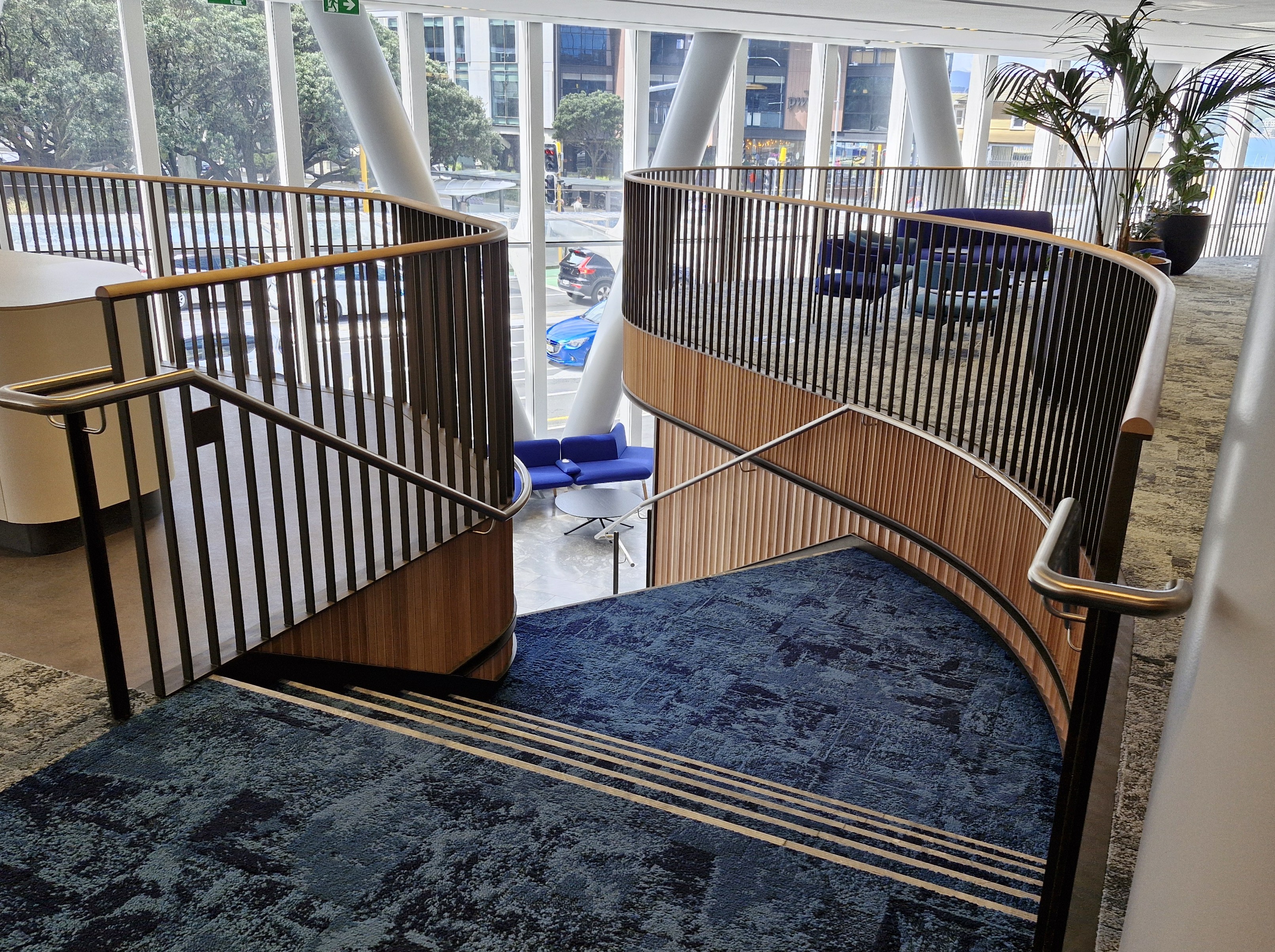
Stairs sit at the centre of circulation, safety, and spatial organisation. As such, it can be said that commercial buildings succeed or fail based on how people move through them.
Yet many strong stair commercial stairs design concepts are diluted during documentation or construction due to structural limits, code requirements, or budget pressure; often beginning with clear architectural intent but shifting as technical constraints surface later in the process.
When this happens, circulation logic weakens, spatial clarity is reduced, and stairs become background elements rather than purposeful design features. Early collaboration with stair manufacturers reduces the risk of late-stage compromise by resolving structure, code, and fabrication constraints while design flexibility still exists.
This approach gives architects greater control over outcomes, protecting design intent while reducing redesign cycles, RFIs, and late-stage compromises that erode spatial quality.
Commercial stairs shape how people move through a building and how spaces connect.
Well-resolved staircase design supports circulation, improves legibility, and contributes to how users experience the space.
Early planning ensures stairs support circulation efficiently and complement the surrounding spaces.
Retail Environments: In retail, stairs positioned along main circulation paths act as visual anchors. Wide, visible flights guide customers to upper levels and secondary floors, increasing exposure to products and improving overall foot traffic flow. Careful layout ensures stairs complement circulation without creating bottlenecks or obstructing sightlines.
Office Environments: In offices, strategically placed stairs connect quiet work zones with collaborative spaces. This encourages natural movement between areas without relying on lifts, supporting productivity and fluid circulation.
Early consideration of stair dimensions, headroom, and approach clearances answers practical questions such as how much space does a staircase take up, allowing architects to maintain functional flow while preserving design intent.
Social stairs integrate stepped seating with standard risers, creating pause points without interrupting circulation. When located near breakout spaces, cafés, or open work areas, these stairs support informal meetings and quick exchanges.
Riser consistency, tread depth, and handrail placement affect how usable these stairs are in practice. Manufacturer input during concept design helps avoid late simplification that can reduce comfort or safety.
Material choices signal values. Reclaimed timber communicates care for resources; steel and glass read as precise and contemporary. Custom balustrades, lighting integrated into stringers, and tactile handrails extend brand expression into daily use.
These details demand coordination with structure and services early. Without early technical coordination, these features are often reduced during value engineering, which weakens the original stair design intent.

Early partnership with a specialised manufacturer protects design quality by resolving buildability while the concept is still flexible.
Commercial stairs carry heavy live loads—often up to 400 kg per square metre—and must perform under constant use. Manufacturers coordinate with engineers to resolve stringer sizing, connection details, vibration control, and tolerances that affect finish quality.
BIM coordination identifies clashes with services before fabrication, avoiding site changes that compromise proportions and sightlines.
Commercial stairs are classified as Common or Accessible Stairways, and each type has specific safety and usability requirements. Addressing these early prevents costly changes later.
Key considerations include:
By addressing compliance, safety, and durability together, architects can protect both the functional performance and the visual quality of commercial stairs from concept through installation.
Planning the manufacturing and installation process early helps architects coordinate construction efficiently. Prefabrication and careful sequencing reduce surprises on site, improve quality, and keep the project on schedule.
Prefabrication: Producing stair components in a controlled workshop environment improves quality and finish. It also shortens on-site installation time, reducing disruption to the construction programme.
CNC Fabrication: Precision machinery allows complex shapes and multi-storey flights to be produced consistently. This ensures exact tolerances, reliable fit, and smoother assembly on site.
Cost Management: Early collaboration with manufacturers enables value engineering opportunities, such as optimising material selection or structural details. This keeps the project within budget without compromising the stair’s functional or visual quality.
Programme Coordination: Stairs can be scheduled to align with other trades and critical milestones, helping architects avoid construction delays and streamline sequencing for tight commercial programmes. This stage is also ideal for confirming placement decisions, including which side is best for staircase placement, while coordinating with structure, fire egress, and services.
Architects carry the tension between clarity of idea and certainty of build. The stair is where that tension is most visible. By treating stairmaking as a design discipline rather than a late trade package, teams protect spatial flow, legibility, and material coherence.
Early collaboration keeps proportions intact, preserves daylight and views, and prevents compliance-driven revisions that flatten character. When manufacturing insight informs concept development, the stair remains a defining feature through documentation, consent, fabrication, and installation.
Great commercial stairs do more than connect floors. They clarify movement, support safety, and give form to how people experience a place.
When architects bring manufacturers into the conversation early, complex designs remain intact through the realities of code, structure, and budget. The result is a stair that reads as designed; precise in detail, durable in use, and consistent with the project’s spatial intent.
Ackworth House partners with architects from concept through installation, aligning engineering, compliance, fabrication, and finish so the stair you draw is the stair that gets built.
If you’re shaping a commercial project where circulation and identity matter, let’s start the conversation early and protect the quality of your design. Contact us today.
Get the benefit of our all-in-one stair designing services that include consultation, proposal, engineering, design, project management, manufacture, installation and aftercare. At Ackworth House, we’re with you every step of the way.
Contact us for a no obligation quote.

Here are five compelling reasons to consider a steel staircase for your commercial space.

Discover how an intercommunicating staircase fosters collaboration and improves work culture. Contact Ackworth House to learn more about this design.
Elegantly designed and skillfully crafted staircases, backed by assistance and advice from the first spark of inspiration to the final installation.


